Seller onboarding

2024
eBay
Design Architect
My impact
I led the end-to-end strategy for seller onboarding, from research synthesis to implementation. I established a scalable framework that aligned teams and secured executive buy-in, ensuring cross-platform consistency. My work drove measurable improvements in seller activation, listing, and profile completion, with customer satisfaction increasing by 6.5%. Beyond immediate gains, I designed a flexible framework that enables personalization based on seller types while ensuring platform-wide alignment. This strategy shaped the 2024 roadmap and integrated Jobs-to-be-Done and HEART metrics, driving continued optimization.
Background
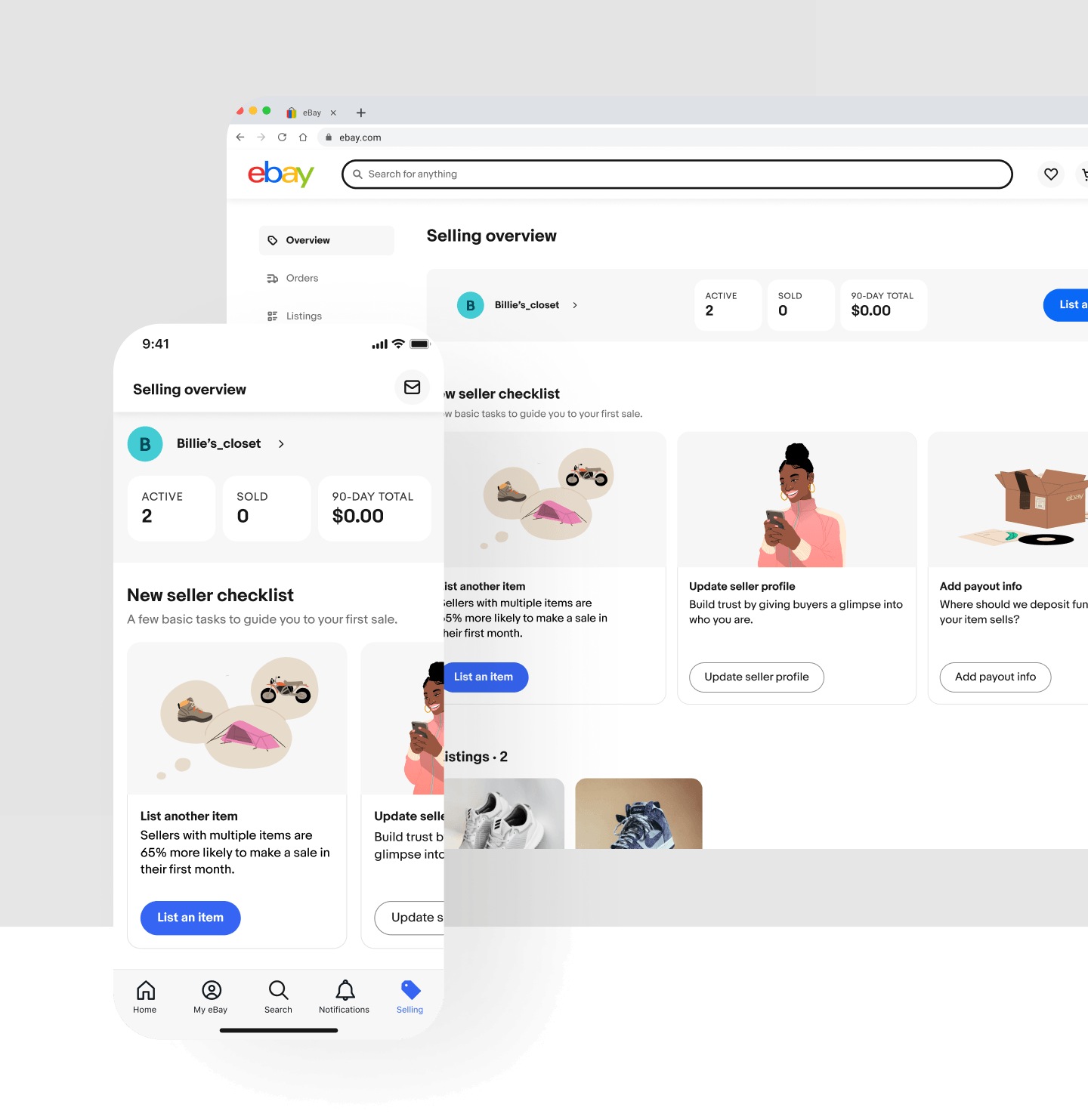
The new seller experience had never been a priority. After listing their first item, casual sellers landed on an empty page, while business sellers saw a generic, outdated card—regardless of experience. Without tailored support, sellers struggled with setup, leading to high drop-off rates. Only 9% of business sellers and 30% of casual sellers made a sale in their first month, compared to 48% on Amazon and 37% on Shopify. Customer satisfaction was just 49%, exposing a critical gap.
Goal
We needed an intuitive, scalable onboarding experience that reduced friction, increased activation, and drove long-term retention. Sellers who made a sale within their first month had 2–3x higher lifetime value, making early success essential for sustained growth.
Challenge
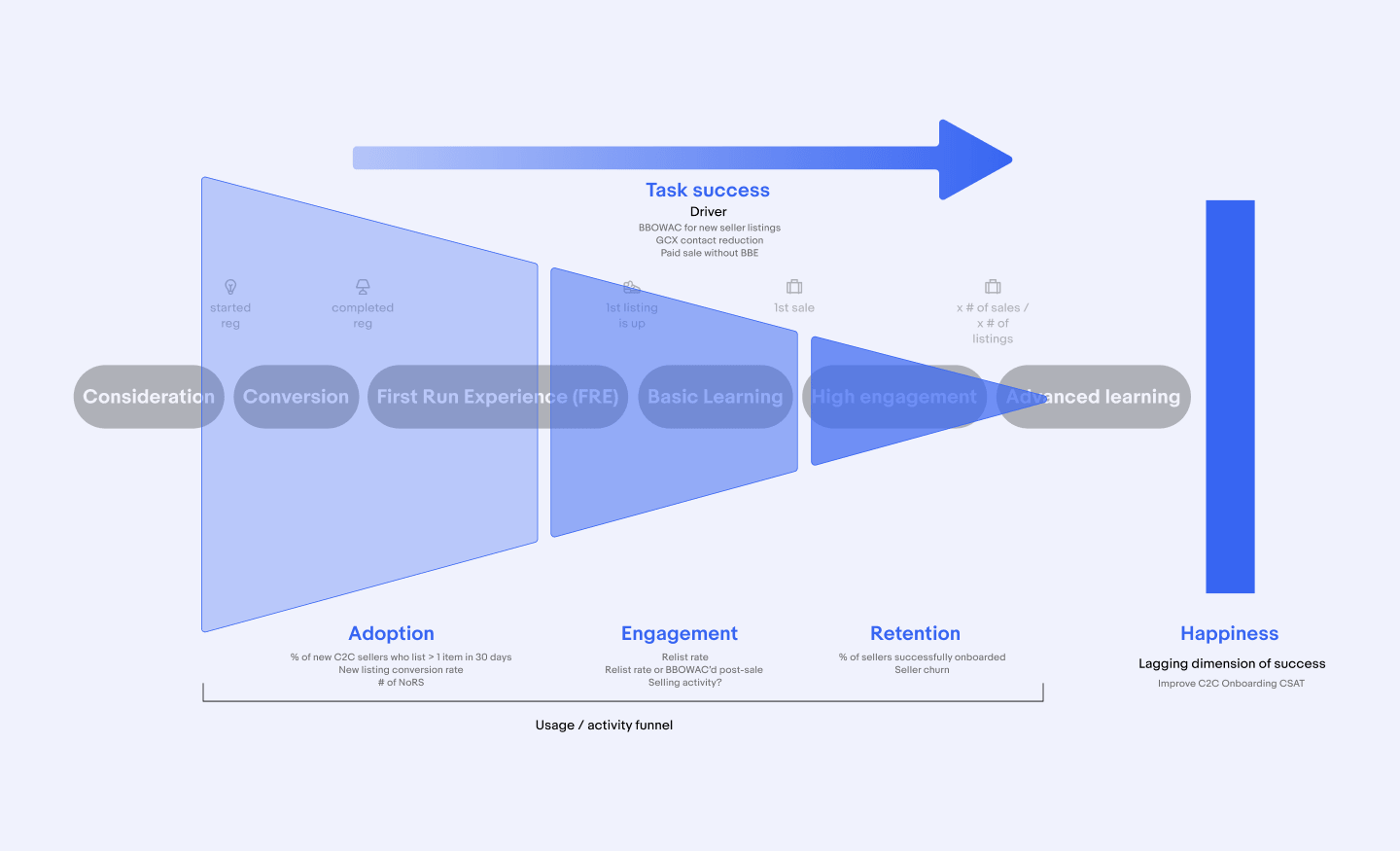
Onboarding was fragmented across multiple teams with competing priorities, requiring clear alignment on goals and non-goals. I used the IDEO Designing Strategy framework to bring business, PM, engineering, and design teams together. Measuring impact was another hurdle, as the small seller cohort made statistical significance hard to achieve quickly. To address this, I introduced the HEART framework, combining leading indicators with lagging metrics to accelerate insights.
Milestone strategy
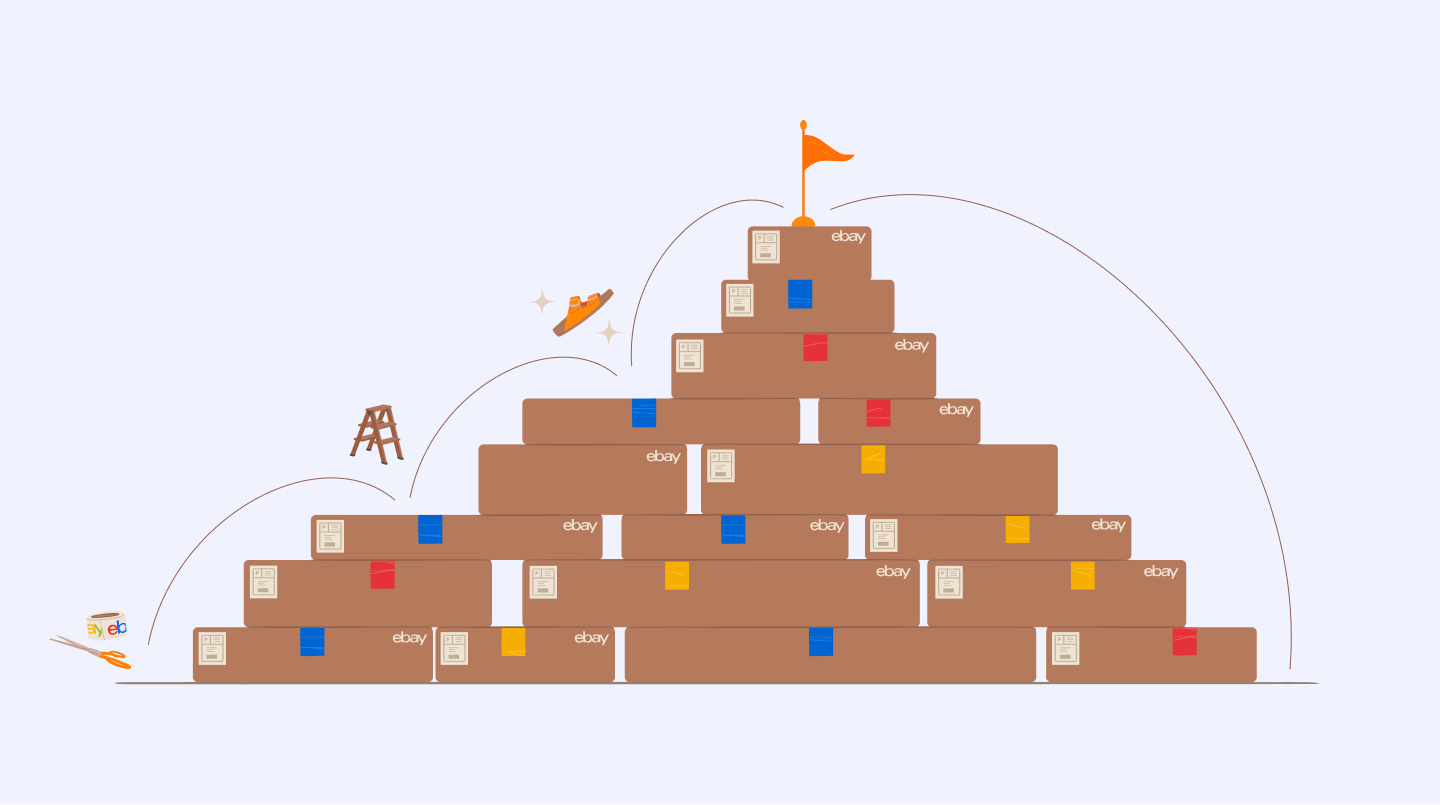
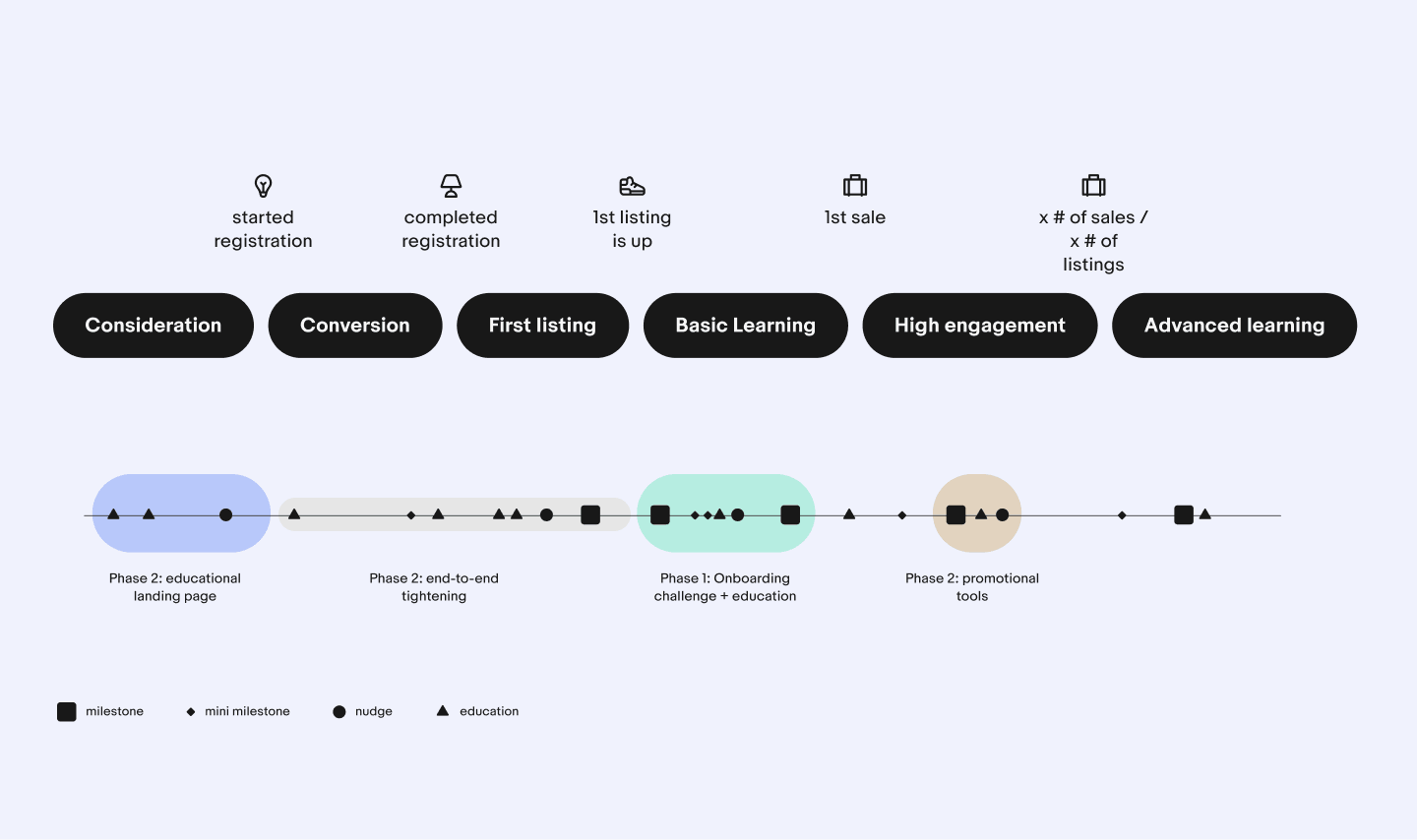
I restructured onboarding into progressive stages, transforming an overwhelming process into a guided, engaging journey. Each step was designed to be personalized and rewarding, motivating sellers to continue setting up and listing while reinforcing a sense of achievement. This approach improved the seller experience and provided engineering with a scalable framework for setting up backend services. The milestone-based strategy became a foundational design model, later adopted by Payments and other teams.
Solution
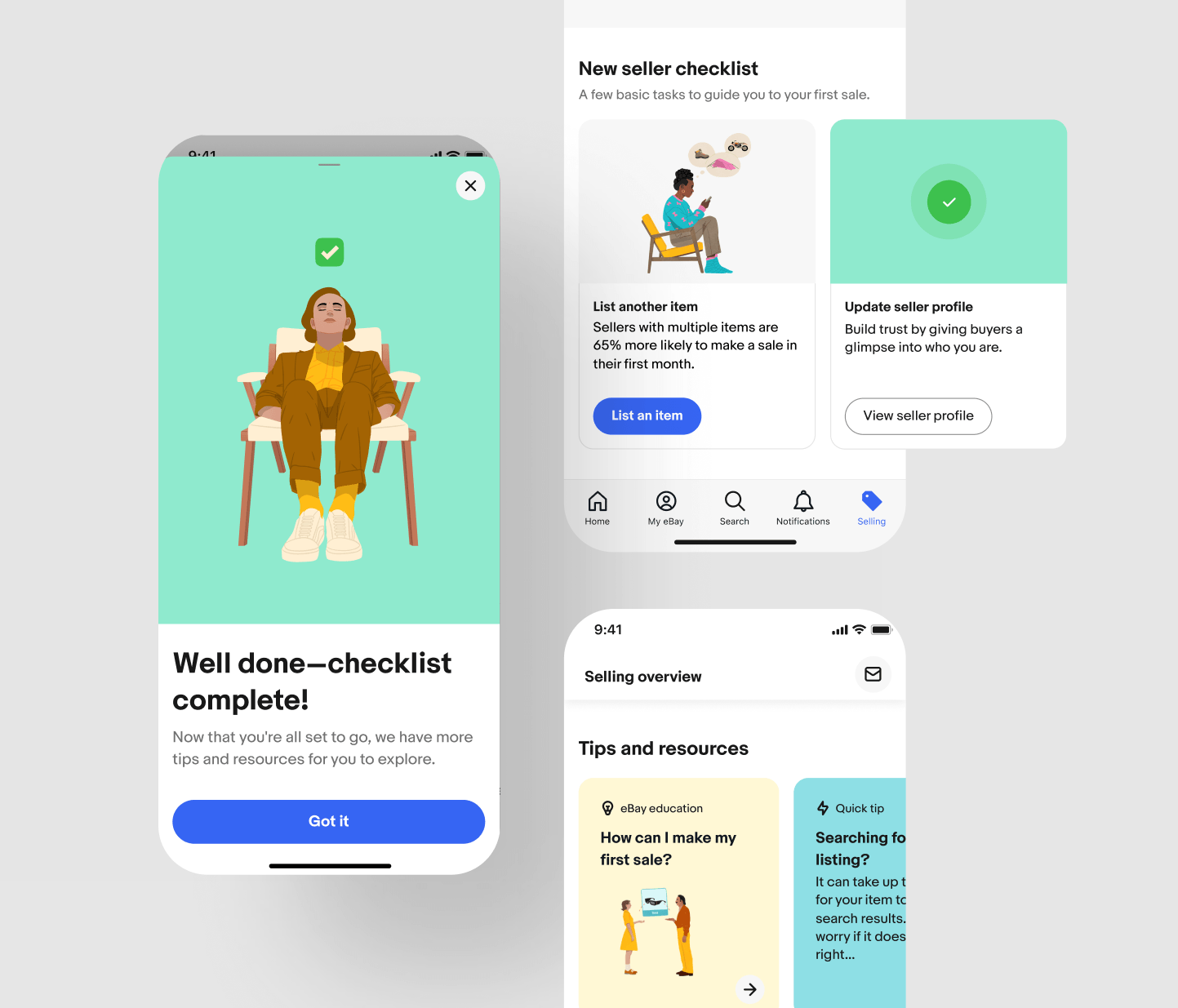
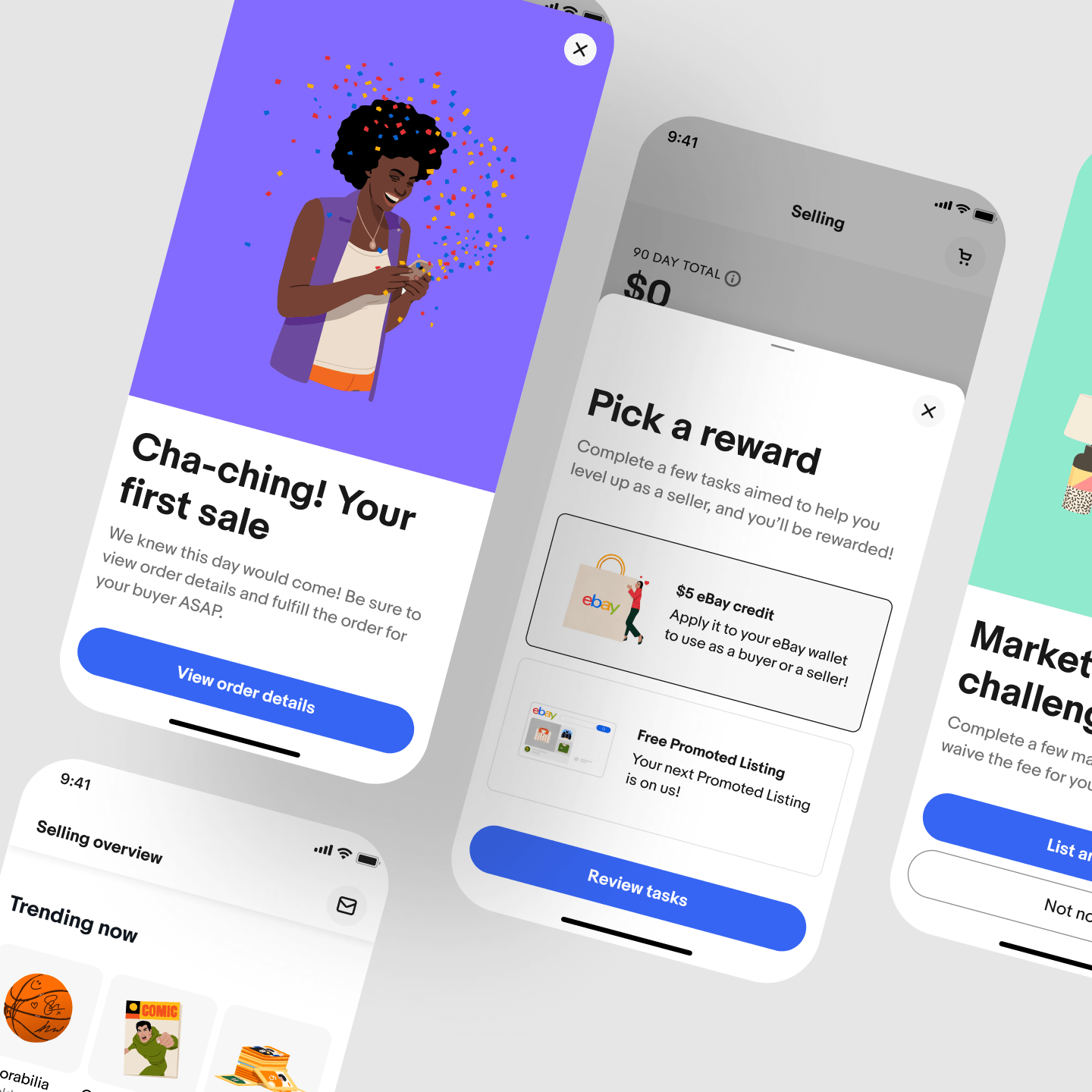
We implemented an adaptive engagement model that guided sellers through milestones, nudges, and contextual selling tips. Key moments—like “Welcome to Selling,” onboarding completion, and the first sale—were celebrated to reinforce progress. Smaller interactions, such as completing checklist tasks or exploring Promoted Listings, sustained momentum. In-context education provided timely, lightweight guidance.
Gamification
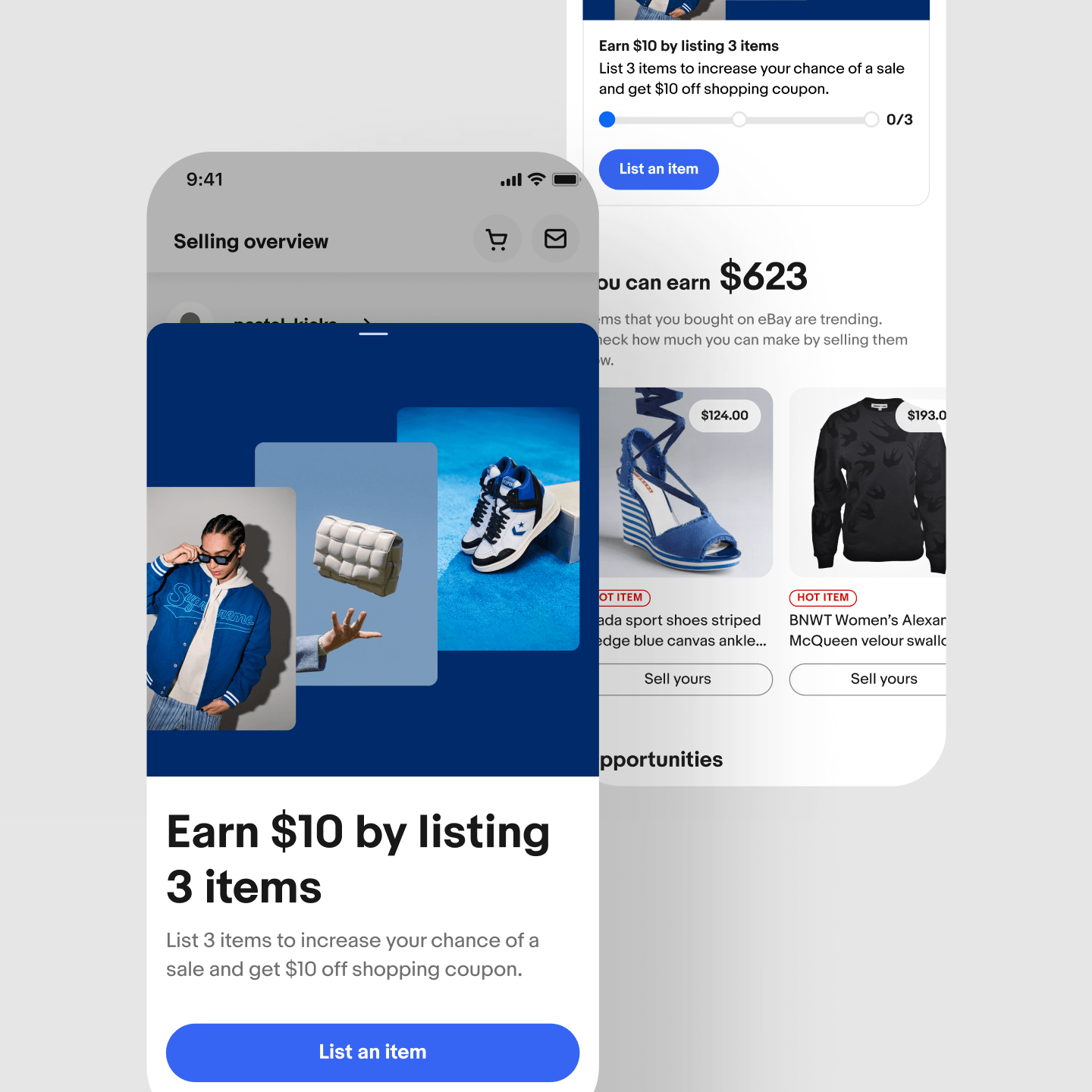
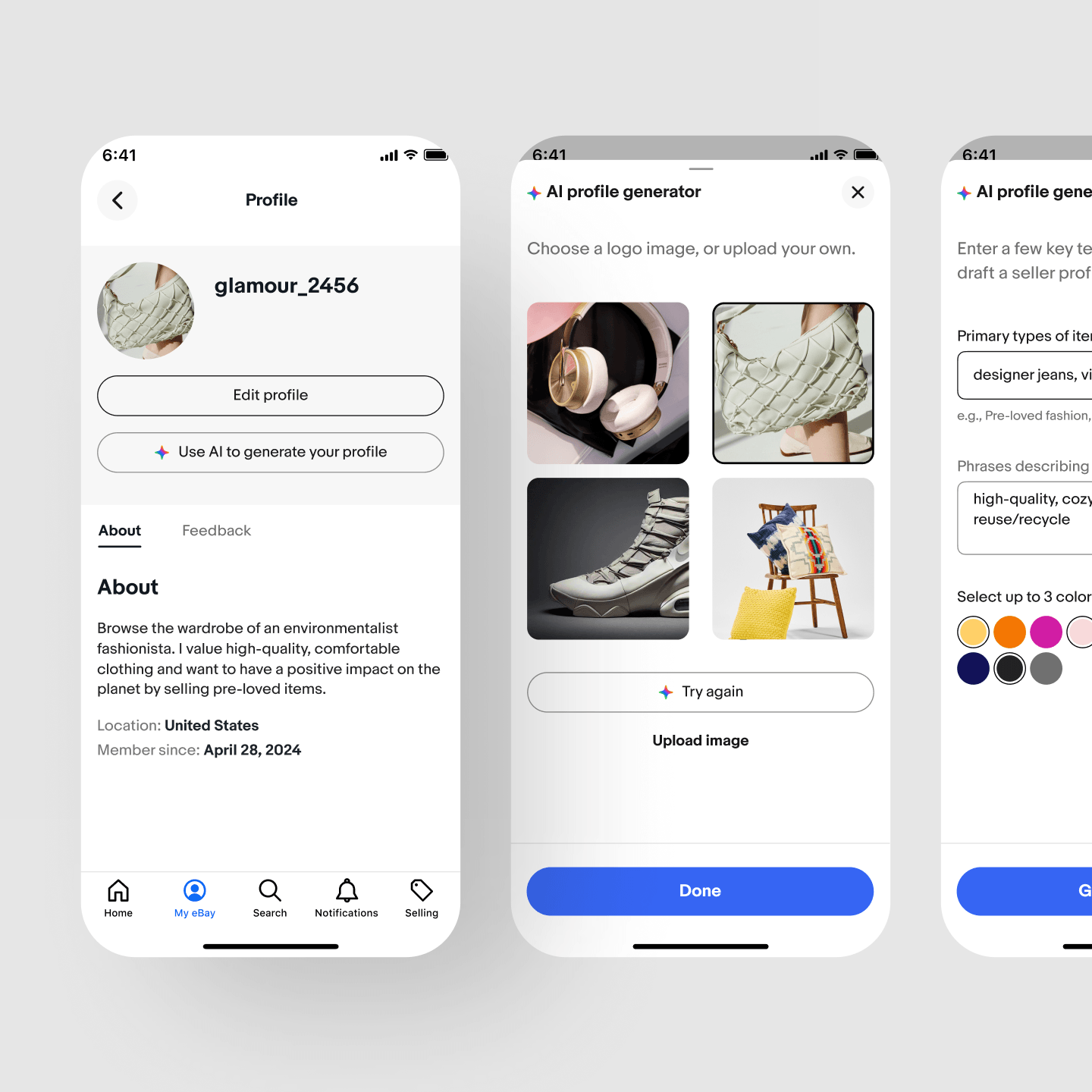
New sellers hesitated to list multiple items, wanting early success before committing more effort. Meanwhile, data showed that more listings increased trust and sales speed. I introduced gamification elements to subtly motivate sellers and reduce effort, guiding them toward success without friction.
Top of the funnel
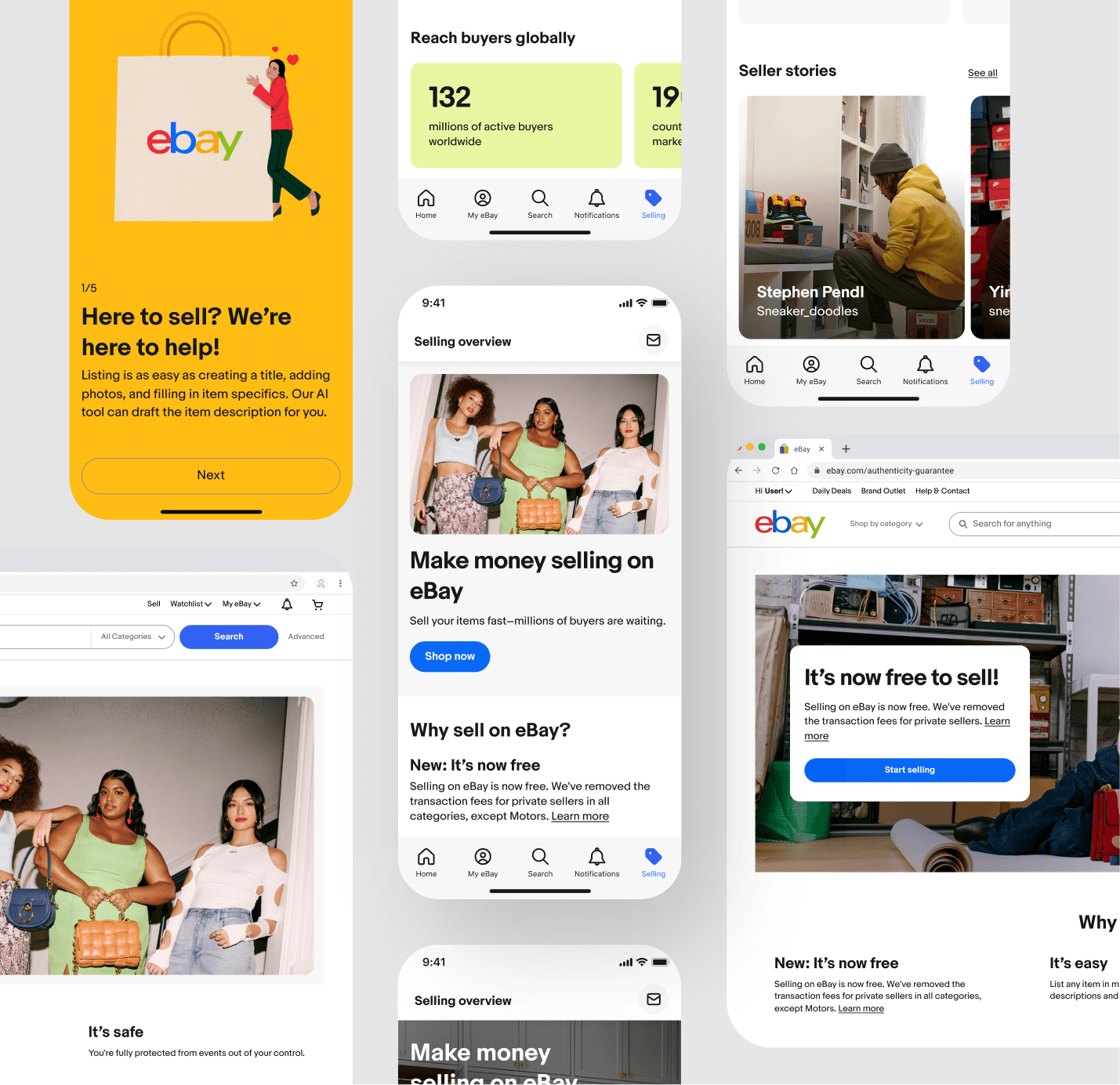
As eBay removed seller fees in Germany and the UK, I optimized the key conversion touchpoint—the selling landing page. Experimenting with content and layout led to a 4% CTR increase on desktop and 17% on mobile.
Streamlining Business Seller Onboarding
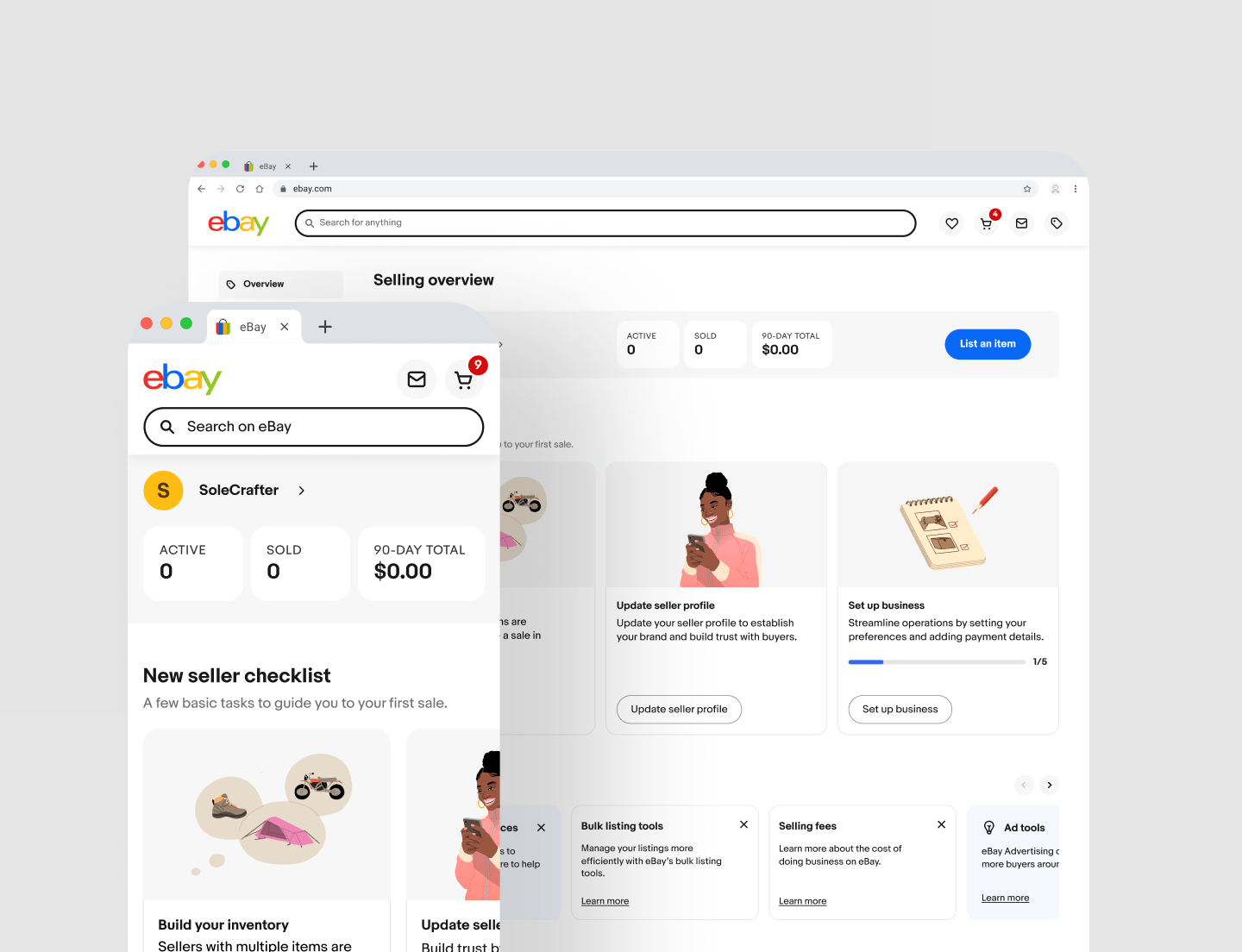
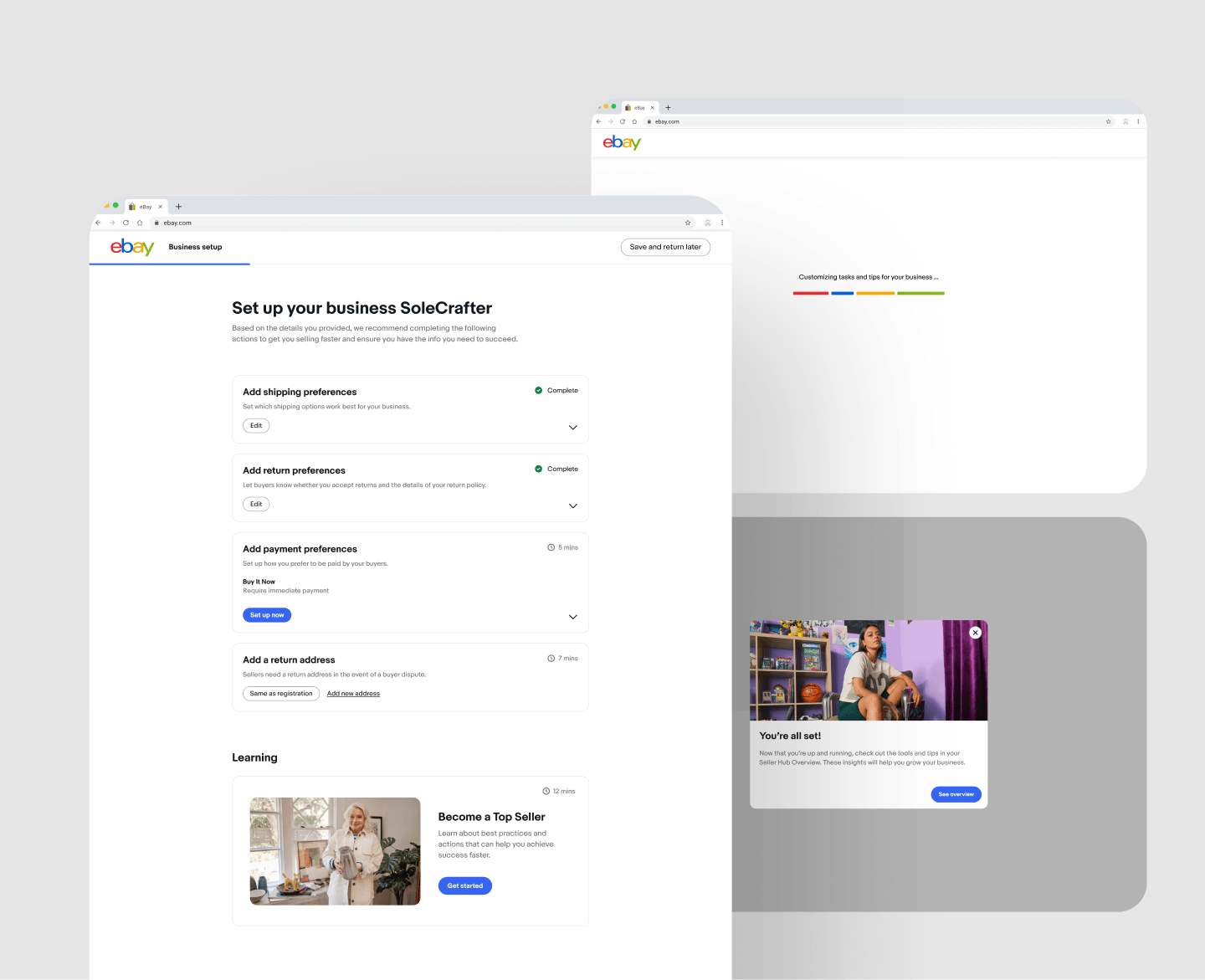
The fragmented consumer and business seller experiences created frustration, especially for sellers upgrading their accounts. I designed scalable onboarding components that worked across both platforms, ensuring a seamless transition and eliminating redundant work. Additionally, I championed reducing onboarding friction from restrictive seller inventory limits with BU partners, resulting in a $25M GMV lift, 180K fewer customer support contacts annually, and $900K in operational cost savings.
Business Personalization
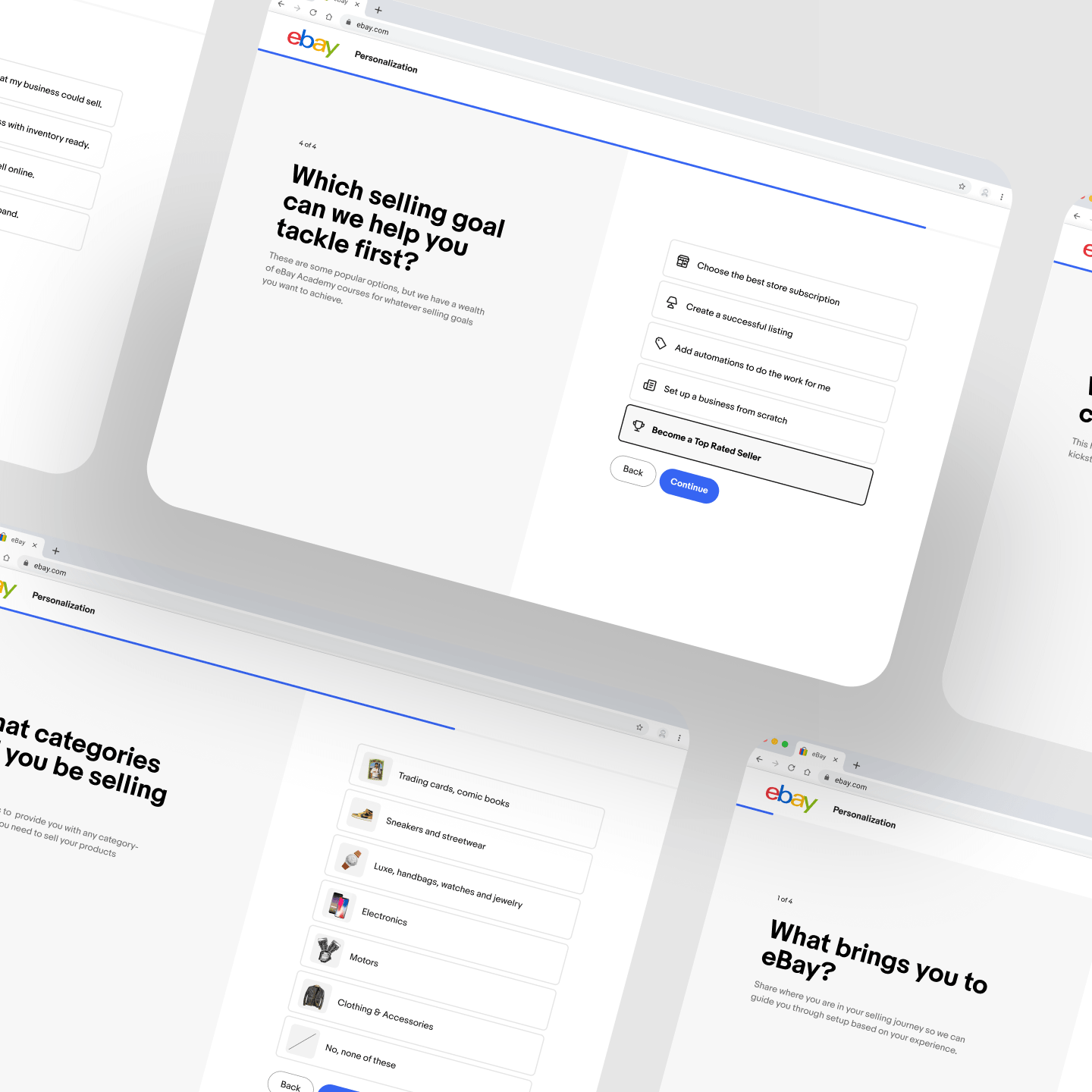
User research and white-glove customer service insights revealed that seller needs varied widely, requiring tailored recommendations. To scale personalized support into a self-serve experience, we introduced a short questionnaire to identify unique seller needs. Early designs caused hesitation in sharing data, so we added a brief explanation on how responses shaped their experience—building trust and increasing engagement.
Metrics and Business Impact
To gain deeper insight into onboarding performance, I introduced the HEART framework, providing leading indicators and granular data on seller engagement. Phase 1 drove significant improvements. Customer satisfaction increased by 6.6% for consumer sellers and 6.5% for business sellers. Profile completion rates rose by 17% for consumer sellers and 50% for business sellers. Business policy enrollment grew by 21%, while the seller listing rate improved by 4%. These changes led to an incremental $16.3M GMV, with an additional $25M lift from inventory limit adjustments.